
Honda F20C: The S2000’s Record-Breaking Naturally-Aspirated Engine
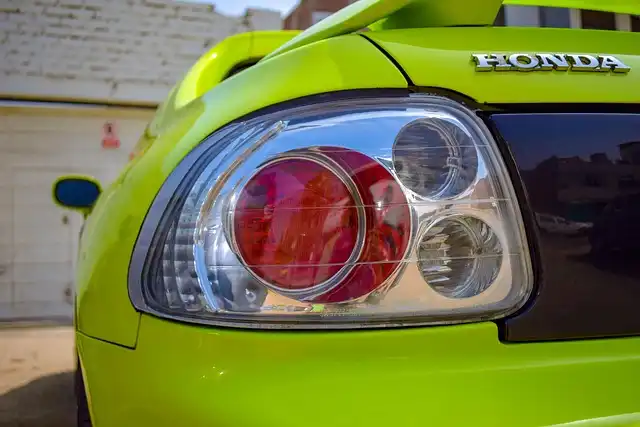
Honda's F20C engine, designed for the S2000, was a 9,000-rpm, naturally-aspirated marvel. It achieved record power density (123.5 hp/liter) through advanced VTEC and meticulous engineering, solidifying Honda's legacy in high-performance engines.
To many, the screaming engine seemed less like a production motor and even more like something pulled from a racetrack paddock. The engine quickly showed its toughness, with proprietors understanding that they might enjoy this little electric motor’s high-rpm thrills for years, without having to fret about it falling apart.
Anosh Khumbatta is an automotive journalist with over a years of experience covering automobiles and bikes. A previous Elderly Contributor and Road Tester, he’s performed considerable performance testing on road and track, recovered classic lorries, and competed at the nationwide level. He’s added to Cars and truck India, Bike India, and various other magazines.
F20C Valvetrain & VTEC System
Up top, valves were as light and slim as feasible while still being solid sufficient to stand up to the anxieties of high-rpm operation. They were operated by a pair of hollow camshafts and high-strength valve springtimes that were created particularly for the F20C utilizing technology from Honda’s racing programs. Of course, the valvetrain was furnished with VTEC, established to kick in at 5,850 rpm and integrating ingenious roller coaxial rocker arms to lower valvetrain friction. Actually, Honda still thinks about the F20C the pinnacle of their variable valve tech, and describes it as the utmost naturally-aspirated VTEC engine.
The S2000’s Vision & Groundbreaking F20C
Honda was, at the time, known for technological advancement, accuracy engineering, competing quality, and exceptional integrity, and was dealing with a cars and truck to commemorate the business’s 50th wedding anniversary. It had to be special, personifying the brand’s heritage and mission for engineering excellence, but also be attainable and enjoyable. Honda engineers Shigeru Uehara and Yoshiaki Akimoto were offered the job of developing a quick, two-seater roadster, and a bespoke engine to choose this brand-new sportscar. In 1999, they supplied the S2000 and the groundbreaking F20C– a little four-cylinder motor that made even more power per liter than the naturally-aspirated V10 and V12 engines built by Lamborghini and Ferrari.
Record-Breaking Power Density
The engineers needed to begin with the ground up, periodically dipping right into Honda’s motorsports knowledge and experience to develop the F20C from the ground up. The outcome was the most power-dense naturally-aspirated engine ever created– a 1,997-cc four-cylinder motor that yelled right to 9,000 rpm and produced 247 hp for a record-setting certain outcome of 123.5 hp/liter. The F20C held this document for over a years, until it was finally dismissed by the Ferrari 458 Italia’s V8.
To build an engine that could dependably spin at speeds that would create lower motors to damage themselves, Honda’s engineers had to concentrate on optimizing cyndrical tube breathing, reducing interior rubbing, and refining combustion chamber layout. What they accomplished inevitably established brand-new standards for what was assumed possible from a 2.0-liter naturally-aspirated engine.
Back in the ’90s, nevertheless, when turbocharged or supercharged engines were taken into consideration as well heavy, intricate, vulnerable, high-maintenance, and unforeseeable to produce conventional appeal, a revvy, naturally-aspirated motor with a details result of over 100 hp/liter was special.
Engine Block & Piston Design
The block was light weight aluminum with fiber-reinforced cylinder linings that allowed for thinner cyndrical tube walls to maintain weight low while preserving strength and helping in warmth dissipation. Pistons were built light weight aluminum, the very first for a Honda roadway auto. They required to be light-weight and solid, as they would certainly see a mean piston rate of 25.2 m/sec at redline, the greatest for a production automobile at the time. The pistons were covered with molybdenum disulfide to decrease friction, while the forged steel crankshaft was sustained by 5 major bearings, rather than the popular 3, to enhance rigidness.
It’s not uncommon for modern-day performance cars to transform 200 hp/liter, with ultra-exclusive supercars also breaching the 300 hp/liter mark. Naturally, these figures are achieved forcibly massive amounts of air into the cyndrical tubes at each consumption stroke, with electrical motors picking up the slack. Back in the ’90s, nevertheless, when turbocharged or supercharged engines were considered too heavy, complex, breakable, high-maintenance, and unpredictable to create traditional appeal, a revvy, naturally-aspirated electric motor with a particular result of over 100 hp/liter was special.
Optimized Breathing: Intake & Exhaust
For an engine to go for high rpm, it needs to be able to breathe easily, and the F20C’s intake and exhaust pipes was designed to do simply that. An intake manifold with absolutely no bends gave a line of sight to 36-mm intake ports, while scorched gases were left by means of 21-mm exhaust ports and a steel 4-3-2 exhaust manifold.
The brief appeared simple in the beginning– create a high-revving, compact, power-dense, naturally-aspirated, four-cylinder engine for a light-weight, rear-wheel-drive roadster. Honda was well known for their tiny, rev-happy motors, so this should have been straightforward sufficient; nevertheless, the brand name’s existing B collection engines were obtaining fairly lengthy in the tooth, and the K series hadn’t been developed. Both these engines were created to be mounted transversely to drive the front wheels, while the short called for a longitudinal front-mid-mounted engine driving the back wheels by means of a six-speed handbook transmission.
In 1999, they supplied the S2000 and the groundbreaking F20C– a little four-cylinder electric motor that made even more power per litre than the naturally-aspirated V10 and V12 engines developed by Lamborghini and Ferrari.
F20C Legacy: Master of Naturally-Aspiration
The F20C cemented Honda’s track record as a master of tiny, naturally-aspirated performance engines each time when the market was starting to pivot towards turbocharging. It was one last hurrah for chauffeurs and lovers that valued the high revs, specific throttle response, and mechanical purity that only a free-breathing engine can offer. It’s no surprise then that also a quarter of a century later, the F20C is still considered one of the greatest four-cylinder engines ever before built.
The result was the most power-dense naturally-aspirated engine ever before developed– a 1,997-cc four-cylinder motor that shouted all the method to 9,000 rpm and placed out 247 hp for a record-setting specific output of 123.5 hp/liter.
Honda was well understood for their tiny, rev-happy motors, so this should have been easy enough; however, the brand’s existing B collection engines were obtaining rather long in the tooth, and the K series had not been developed. Both these engines were designed to be placed transversely to drive the front wheels, while the brief called for a longitudinal front-mid-mounted engine driving the back wheels through a six-speed handbook transmission.
1 Engine performance2 High-revving
3 Honda F20C engine
4 Honda S2000
5 Naturally-aspirated
6 VTEC technology
« KYB ActRide: App-Controlled Aftermarket Suspension Redefines RideMazda CX-5 Hits 5 Million Milestone Ahead of All-New Third-Gen Launch »